
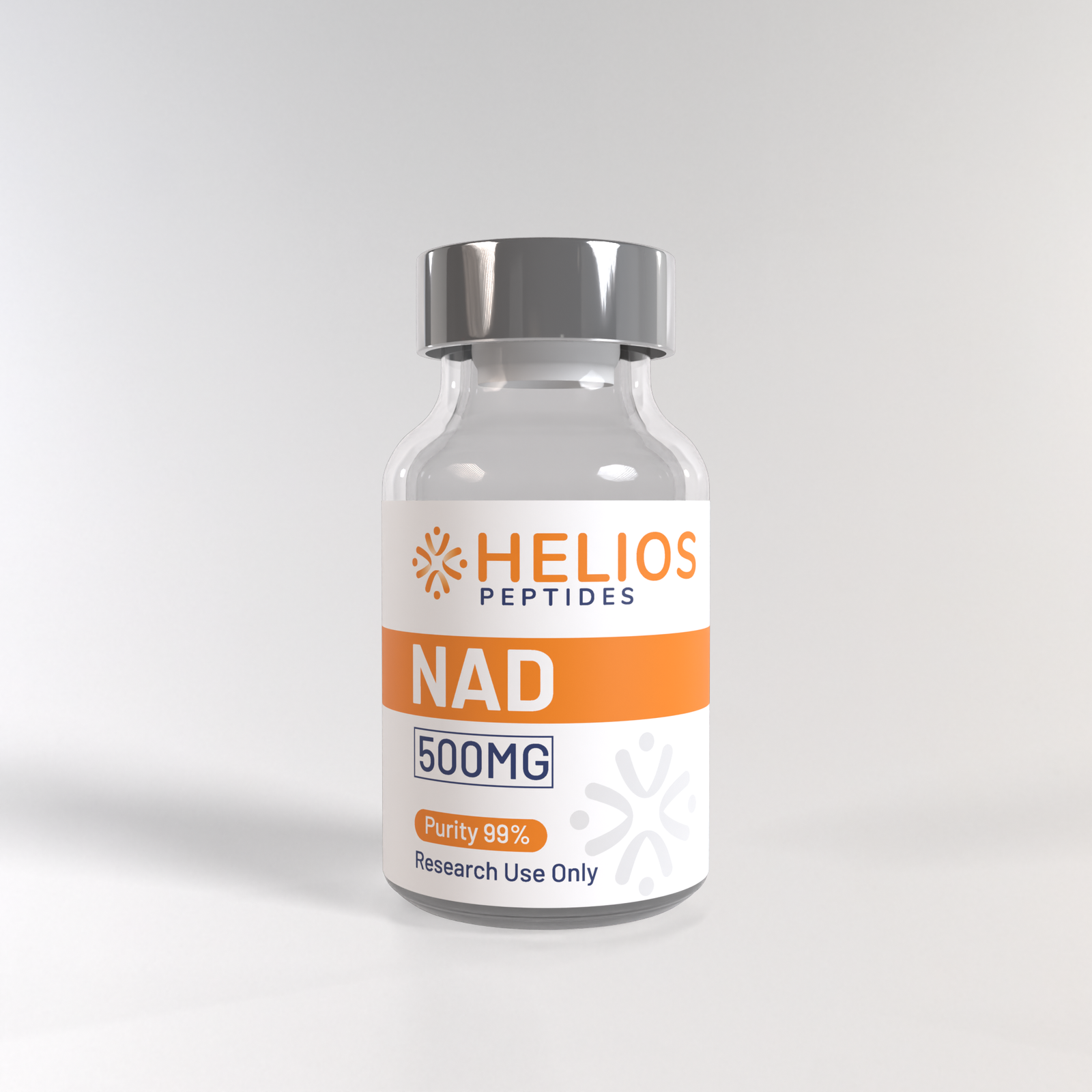
NAD
NAD (Nicotinamide Adenine Dinucleotide) is a crucial coenzyme involved in biochemical processes essential to cellular function. As a research-use-only peptide, this substance is provided for academic or experimental investigation within controlled laboratory settings. It plays a vital role in redox reactions, energy metabolism, and signaling pathways, making it a subject of extensive scientific study.
Research Context
NAD is primarily synthesized from dietary components like niacin and tryptophan, yet its levels decline with age, contributing to metabolic dysfunctions. Researchers explore NAD-related compounds—such as NAD precursors, analogs, and modulating enzymes—as potential targets for studying aging, metabolic diseases, and cellular regeneration. This product is intended for use in experimental settings to investigate NAD biology under scientific supervision.
Research Overview
NAD serves as an essential cofactor in enzymes like NAD-dependent sirtuins (SIRT1-7), which regulate longevity, metabolism, and stress responses. Emerging studies examine NAD’s role in mitochondrial function, epigenetic modifications, and immune signaling. While research on NAD supplementation in animals has shown promising results in extending healthspan, human data remain preliminary and context-dependent.
Key Research Focus Areas
- Cellular Aging Studies: Investigating NAD’s role in mitochondrial decline and cellular senescence via sirtuin activation.
- Metabolic Health: Exploring NAD-dependent pathways in glucose metabolism, lipolysis, and insulin sensitivity in animal models.
- Epigenetic Regulation: Examining NAD’s influence on DNA repair, histone modifications, and gene expression in stress responses.
- Neurodegeneration: Analyzing NAD dynamics in neurodegenerative models (e.g., Alzheimer’s, Parkinson’s) and its potential as a protective factor.
- Immune Modulation: Studying NAD’s role in immune cell differentiation, inflammation, and adaptive responses in preclinical settings.
Safety Considerations
NAD and its derivatives are highly reactive molecules. In research settings, proper handling protocols—including protective equipment, containment measures, and compliance with Institutional Biosafety Committee (IBC) guidelines—are mandatory. Accidental exposure may require immediate decontamination. Always conduct experiments in accredited facilities with trained personnel.
For research use only. Not for human or animal consumption.
| Size | 1000MG, 500MG |
|---|

Reviews
There are no reviews yet.