
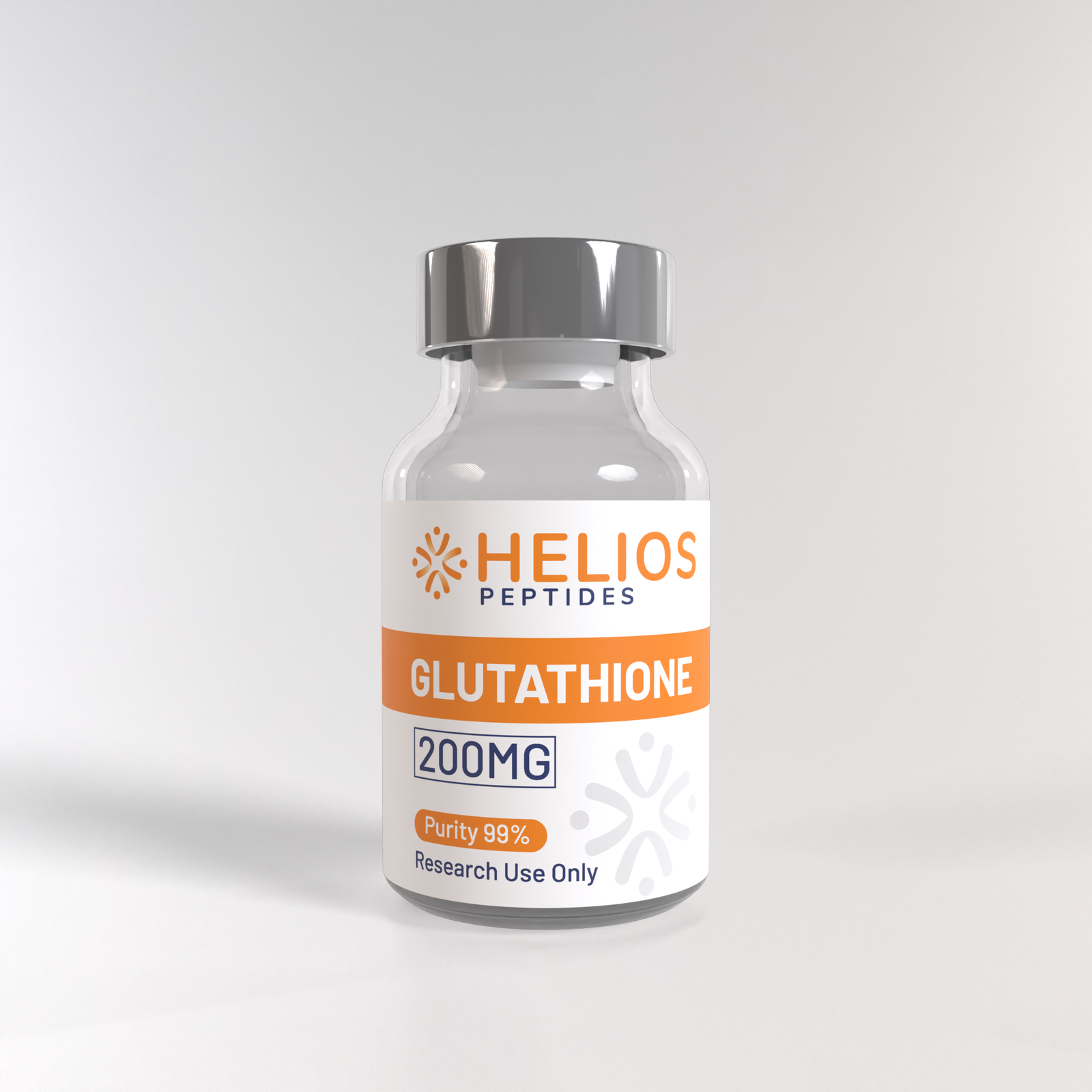
GLUTATHIONE
Glutathione is a tripeptide composed of the amino acids glutamine, cysteine, and glycine, playing a critical role in cellular redox homeostasis and metabolic processes. In research settings, it is widely utilized for its potent antioxidant, detoxification, and biosynthetic functions. This product is intended for academic, industrial, or specialized research applications only.
Research Context
Glutathione functions as the primary intracellular antioxidant, modulating oxidative stress by directly neutralizing reactive oxygen species (ROS) and recycling other antioxidants, such as vitamin C and E. Its metabolic role extends beyond antioxidant defense to include detoxification of xenobiotics, protein synthesis, and nucleotide biosynthesis. Due to its central biochemical function, glutathione is a key variable in studies examining cellular stress responses, aging, neurodegenerative diseases, and metabolic disorders.
Research Overview
Research involving glutathione often explores its biochemical interactions, such as:
- Regulation of glutathione synthesis pathways, including the activity of enzymes like glutamate-cysteine ligase (GCL), which catalyzes the first committed step in glutathione biosynthesis.
- Investigations into extracellular glutathione delivery, such as through synthetic peptides or conjugated forms, to assess its potential in therapeutic contexts where intracellular availability is limited.
- Analysis of glutathione transport mechanisms, including the contribution of systems like the SLC7A11 (glutathione transporter) in maintaining redox balance.
Its applications span from basic biochemical studies to the development of advanced biomaterials and synthetic biology applications, where its antioxidant properties are leveraged to stabilize reactive intermediates.
Key Research Focus Areas
- Antioxidant and Redox Biology: Studies on glutathione’s role in mitigating oxidative damage in cells, tissues, and model organisms. Investigations often involve measuring its capacity to quench ROS, modulate oxidative stress markers (e.g., 4-hydroxynonenal, malondialdehyde), and assess its interaction with other antioxidants (e.g., ascorbate, glutathione peroxidase enzymes).
- Detoxification and Xenobiotic Metabolism: Evaluation of glutathione’s involvement in phase II drug metabolism, particularly in its conjugation with electrophilic compounds (e.g., via glutathione-S-transferases). Research often examines its capacity to protect cells from chemical toxins and environmental stressors.
- Biochemical Synthesis and Regulation: Exploration of the enzymatic and non-enzymatic pathways that govern glutathione homeostasis. This includes the study of its synthesis (glutamine + cysteine → glutathione) and recycling (e.g., via glutathione reductase).
- Metabolic and Disease-Associated Studies: Analysis of glutathione’s dysregulation in pathological conditions such as neurodegenerative diseases (e.g., Parkinson’s disease), liver cirrhosis, and cancer. Studies often aim to understand how altered glutathione levels contribute to disease progression or identify potential biomarkers.
- Synthetic and Biotechnological Applications: Investigation of glutathione’s use in the development of controlled-release drug delivery systems, synthetic biology constructs (e.g., as a scaffold for protein engineering), and nanomaterial stabilization. These applications often focus on engineering modified forms of glutathione to enhance its stability or target-specific cellular delivery.
Safety and Compliance Considerations
Glutathione is generally recognized as safe (GRAS) for use in food and pharmaceutical applications in regulated settings. However, in research contexts, its handling requires adherence to standard laboratory practices for peptide synthesis, including proper sterilization, storage under controlled conditions (e.g., desiccated at −20°C), and disposal protocols for waste. Due to its reactivity and potential for toxicity at high concentrations, researchers should follow institutional guidelines for handling peptides and evaluate its compatibility with specific experimental designs.
For research use only. Not for human or animal consumption.
| Size | 200MG, 500MG |
|---|

Reviews
There are no reviews yet.